Repeat orders and the learning curve
返单与学习曲线
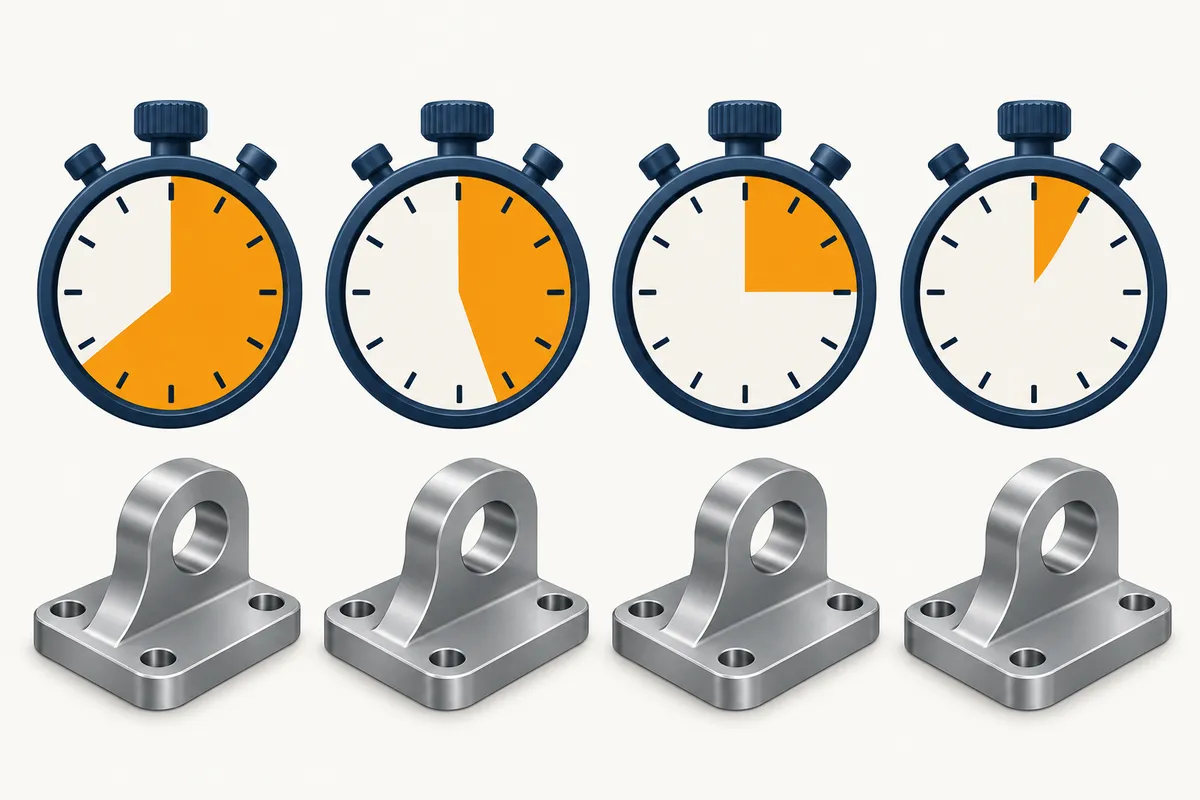
In plain words
Making something for the second time is always easier. The program is written, the clamps exist, the mistakes have been made. So a repeat order should cost less than the first one, and the hundredth part takes less time than the tenth.
What it is
The first order of a part pays for programming, fixtures, prove-out and mistakes. A repeat order reuses all of that, so it should cost less, and times keep falling as the shop learns the part. The classic learning curve says each doubling of total quantity cuts unit time by a fixed percentage.
Why it matters for products
Quoting should know whether a part, or a close relative, has run before, and split one-off cost from recurring cost; storing programs, fixtures and actual times per part number is what makes repeat pricing accurate.