Plastics and composites
塑料与复合材料加工
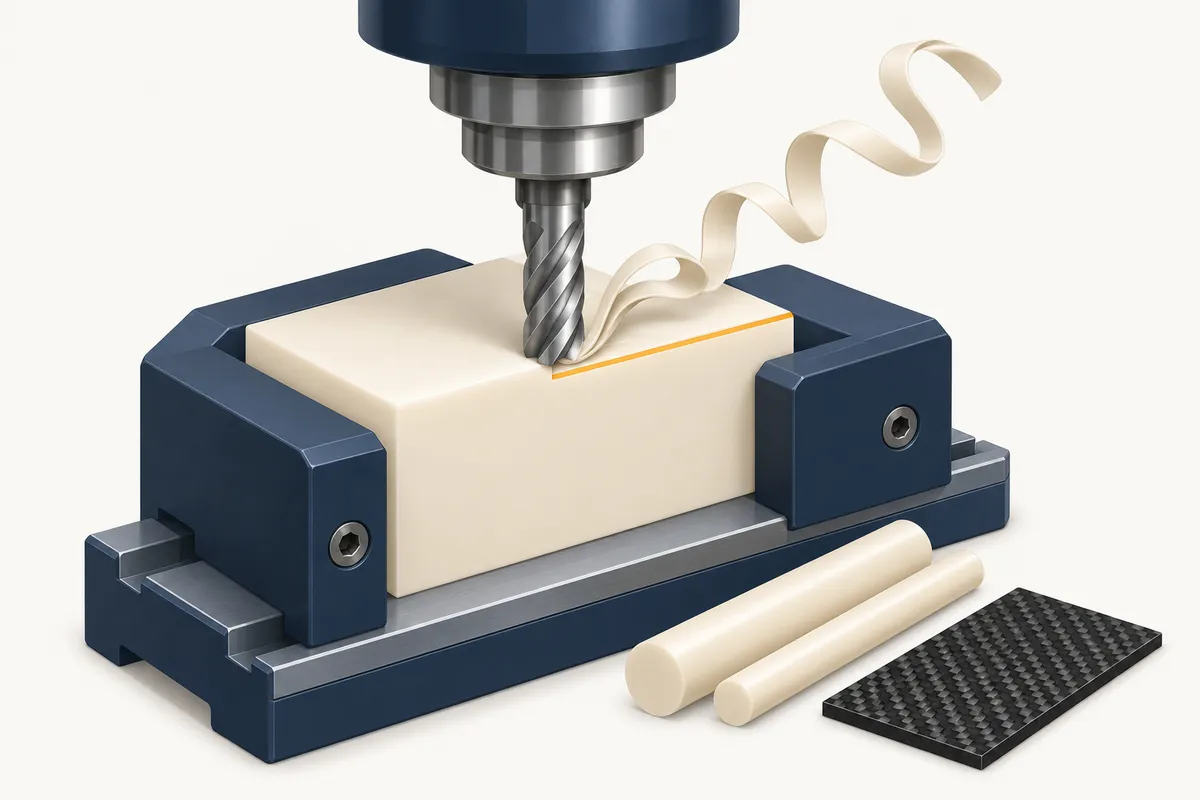
In plain words
Plastic cuts like butter, but it is tricky: it melts if it gets warm, bends away from the cutter, and changes size with temperature and damp. Getting an exact size in plastic is often harder than in steel.
What it is
Engineering plastics (POM, nylon, PEEK, PTFE, acrylic) cut easily but behave differently from metal: they melt or smear if heat builds up, spring away from the tool, move with clamping pressure, temperature and moisture, and creep after machining, so tight tolerances are harder than they look. Fibre composites are abrasive, wear tools fast and can delaminate or fray at the edges; their dust needs extraction.
Why it matters for products
A material class with its own cutting data, tool choices, holding rules and realistic tolerance limits; applying metal rules to plastic parts misprices them.