Chip formation and built-up edge
切屑形成与积屑瘤
In plain words
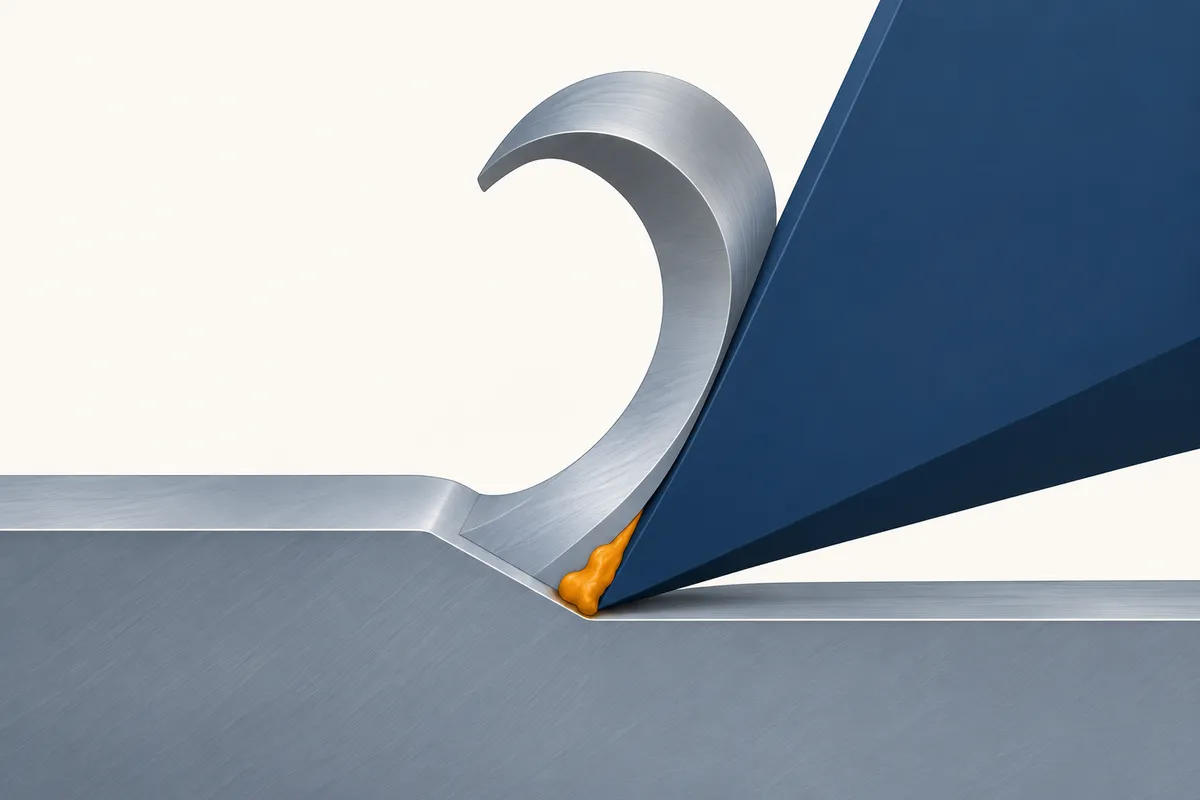
Cutting metal is less like slicing bread and more like a snow plough: the edge pushes the metal ahead of it until a thin layer gives way and slides off as a chip. If the cut is too slow or too timid, soft metal sticks to the edge in a lump and the surface comes out torn.
What it is
Cutting is not splitting. The edge pushes into the metal until a thin layer shears off along a slanted plane and slides up the tool face as a chip; most of the cutting energy is spent in that shear zone and in friction on the face. Ductile metals give long continuous chips, brittle ones such as cast iron break into crumbs. At low speed, soft sticky metals weld onto the edge as a built-up edge that spoils the finish and tears the edge when it breaks away. Some alloys also harden as they are cut, so a timid cut that rubs makes the next pass harder.
Why it matters for products
The physical reason behind minimum chip thickness, minimum cutting speed and the material coefficients in force and power models; parameter rules should keep CAM output out of the rubbing and built-up-edge zones.