Cutting tool geometry: rake, relief and edge preparation
刀具几何角度
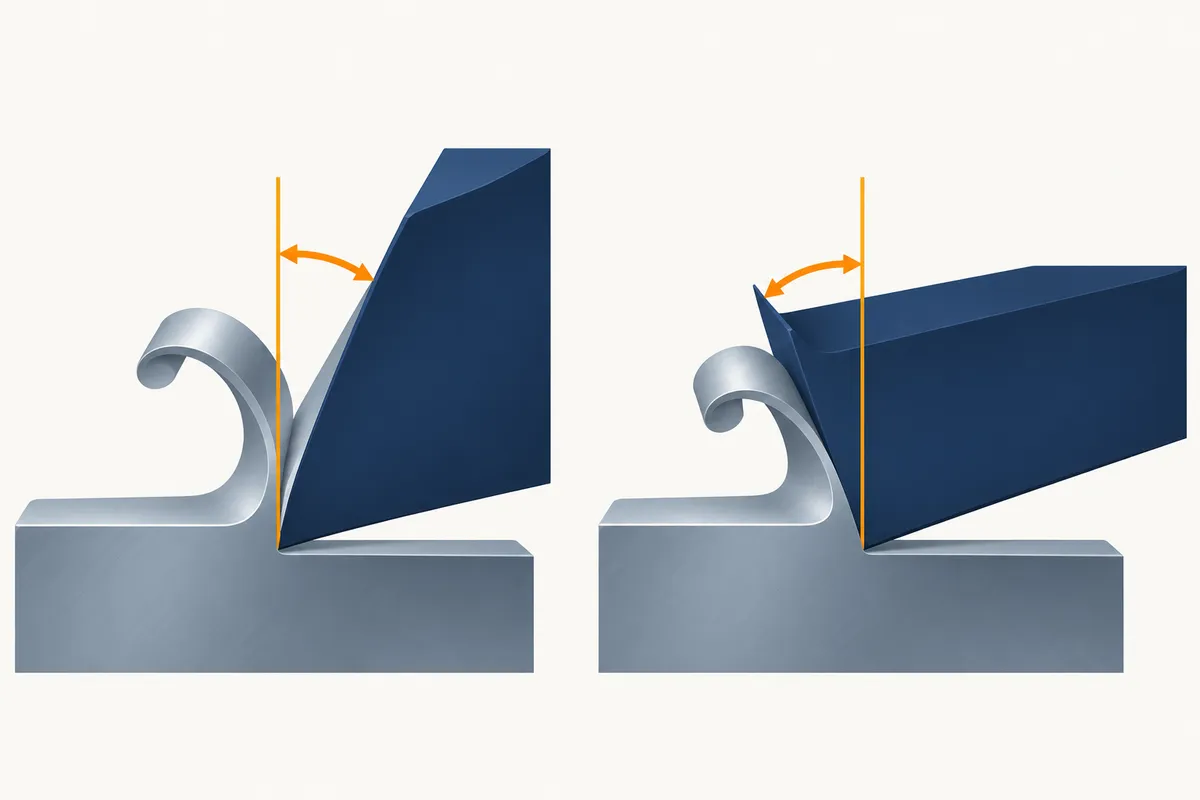
In plain words
The exact angles of a cutting edge matter, like the difference between a razor and an axe. A sharp edge that leans back slices easily but chips if the metal is hard; a blunt, sturdy edge survives hard metal but needs more force. Each material gets its own edge shape.
What it is
The angles of the cutting edge decide how it cuts. Rake is the tilt of the face the chip slides on: more positive rake cuts with less force but leaves a weaker edge. Relief, also called clearance, keeps the flank behind the edge from rubbing. The helix angle of a milling cutter spreads the cut over time and lifts chips out. Edge preparation, a tiny hone or chamfer, strengthens the edge for hard materials. Tools for aluminium are sharp and positive, with two or three deep flutes; tools for hardened steel look blunt and are strong.
Why it matters for products
Geometry fields in the tool library explain why a tool suits one material group and fails in another, and they feed force and finish models.