Cutting tools
刀具
In plain words
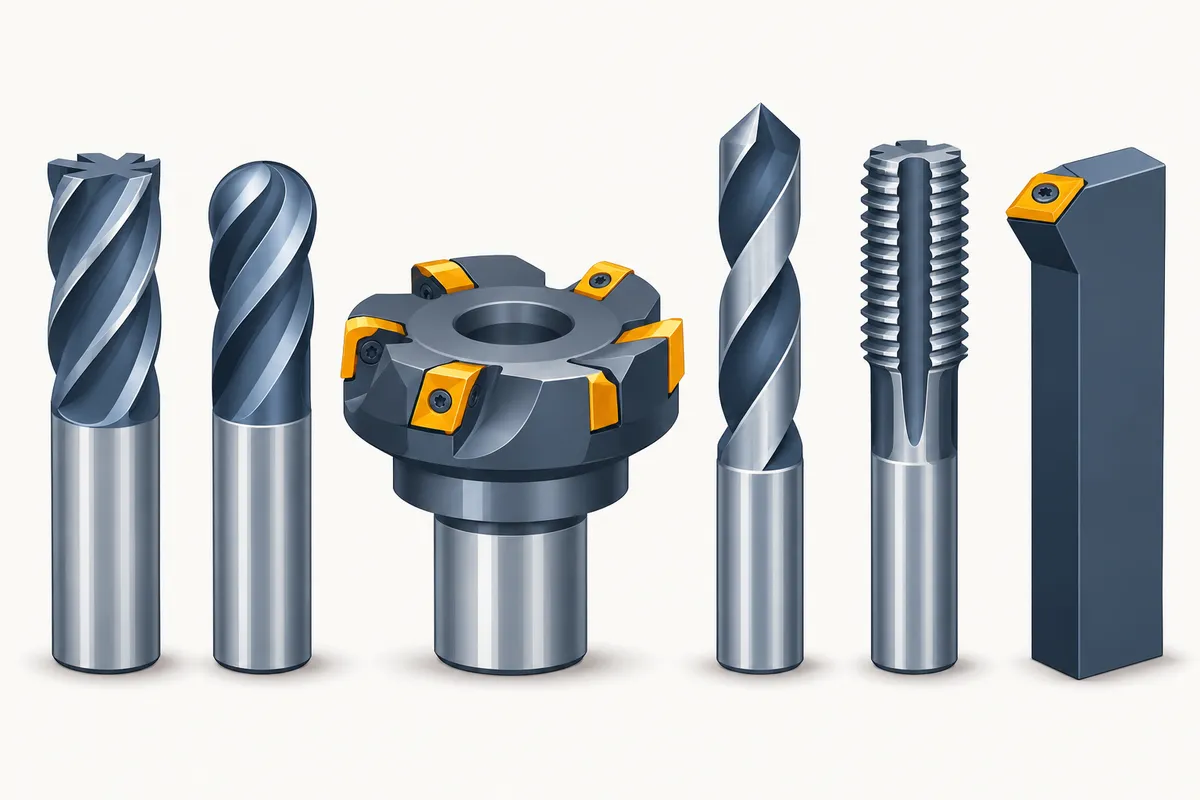
The cutters are like a chef’s knives: different shapes for different jobs. Flat-ended ones make floors and walls, round-ended ones make curves, drills make holes. The cutter’s size decides what shapes it can physically reach.
What it is
End mills (flat, ball, bull-nose), face mills, drills, taps, reamers, boring bars and turning inserts. Key geometry: diameter, flute length, number of flutes, corner radius and helix angle. The tool's diameter and length decide which shapes it can physically cut.
Why it matters for products
A tool library is a required data set for CAM automation and for realistic time estimates.
Learn first
Opens the way to
- 10. Hole making: drilling, reaming, boring
- 14. Roughing, semi-finishing and finishing
- 17. CAM and toolpaths
- 19. Design for manufacturability, DFM
- 26. Tool wear and tool life
- 28. Tool accessibility and reach
- 35. Tool deflection
- 40. Tool materials and coatings
- 64. Tool holders and runout
- 65. Indexable inserts
- 92. Tool management
- 106. Cutting tool geometry: rake, relief and edge preparation
- 107. Cutting data libraries
- 121. Form tools and special cutters
- 124. Automatic tool changer and tool magazine