Milling
铣削
In plain words
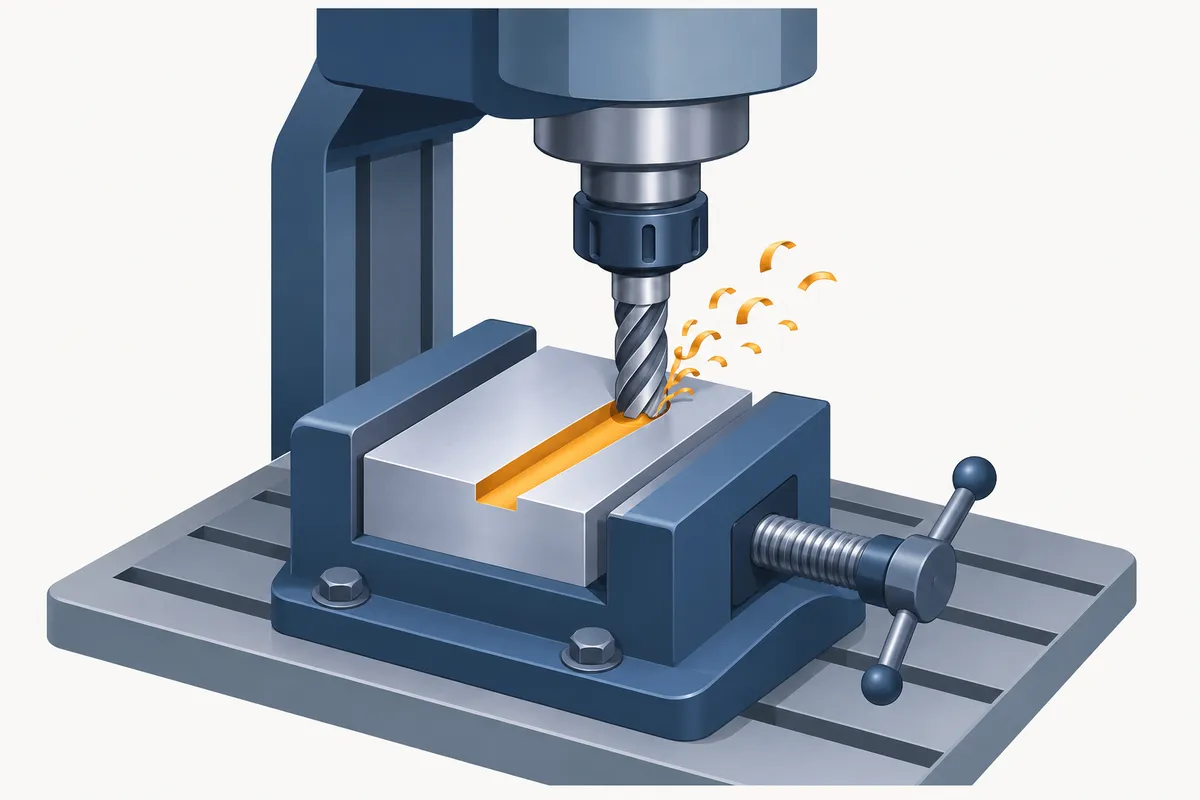
Think of an electric whisk with sharp teeth. It spins while the metal block is held still, and wherever the spinning cutter goes it shaves metal away. Move it around under computer control and you can carve almost any blocky shape.
What it is
A rotating multi-tooth cutter removes material from a workpiece that is held still or moved under it. It makes flat faces, pockets, slots, contours and free-form surfaces, and it is the main process for prismatic (box-like) parts.
Why it matters for products
Most quoted parts are milled, so milling time is the first thing a pricing model must estimate well.
Opens the way to
- 4. Setup
- 5. Cutting parameters: speed, feed, depth of cut
- 8. Machine axes and configurations
- 10. Hole making: drilling, reaming, boring
- 11. Cutting tools
- 12. Workholding and fixturing
- 17. CAM and toolpaths
- 20. Machining features and feature recognition
- 37. Machine types: VMC, HMC and turning centers
- 49. Deburring and edge finishing
- 68. Climb and conventional milling
- 81. Mill-turn and multitasking machines
- 104. Broaching, gear cutting and other special cutting processes