Climb and conventional milling
顺铣与逆铣
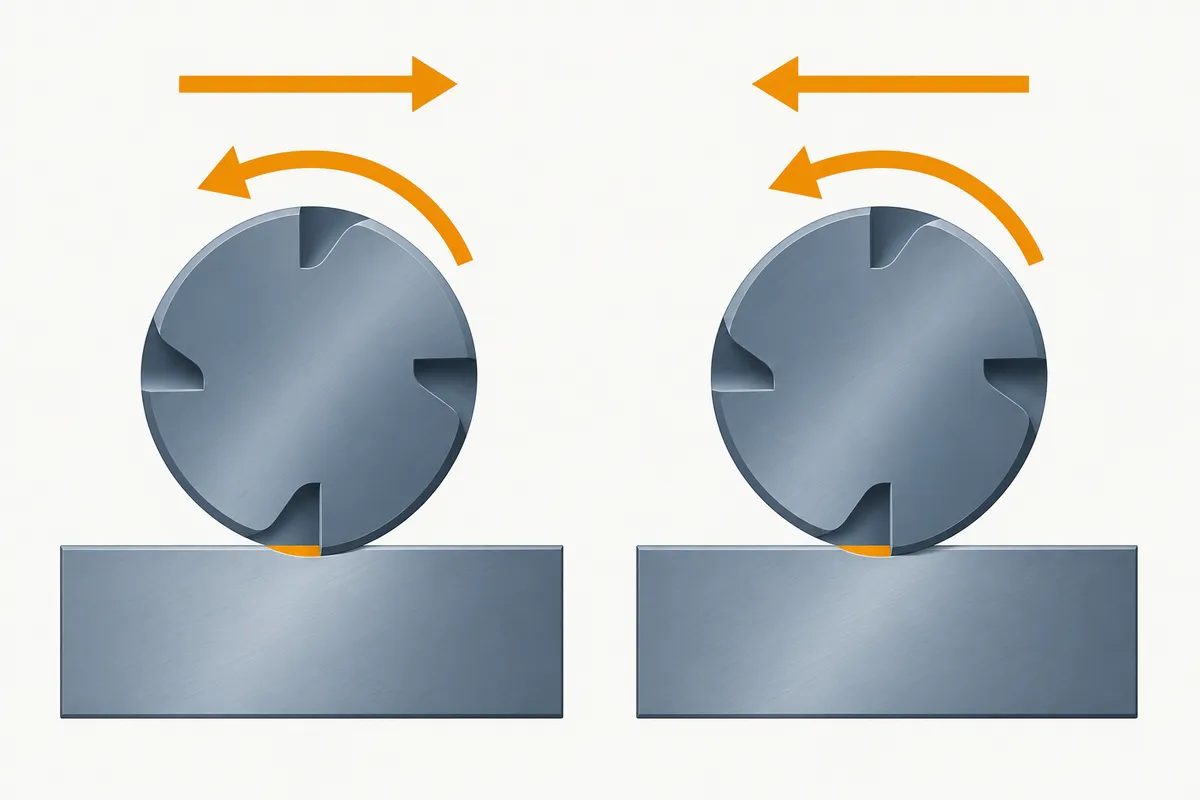
In plain words
A spinning cutter can move along the metal in two directions. One way each tooth bites thick and finishes thin; the other way it rubs first and then bites. The first is gentler and is the normal choice on CNC machines.
What it is
In climb milling the cutter rotates with the feed, so the chip starts thick and ends thin: less heat, better finish and longer tool life, and the default on CNC machines. Conventional milling does the reverse and is used on rough skins or machines with backlash.
Why it matters for products
A toolpath attribute an optimizer must respect.