Material purchasing and price basis
材料采购与计价
In plain words
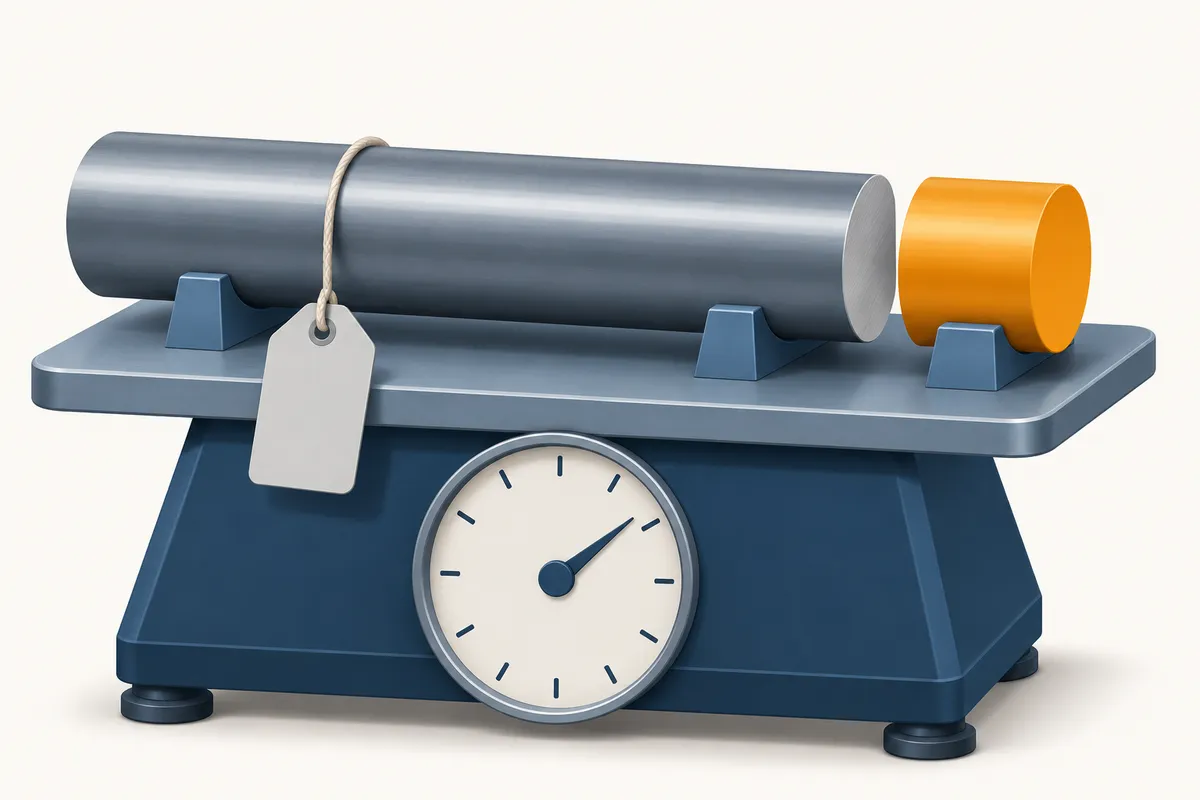
Metal is bought by weight, like vegetables, and the price moves with the market. You often have to buy a whole bar even if you need a short piece, pay for cutting and delivery, and decide who pays for the leftover.
What it is
Metal is priced by weight, and the rate depends on alloy, form (bar, plate, tube), size, quantity and the market that day; alloy surcharges move with nickel, molybdenum and similar inputs. Suppliers add cutting charges, minimum order values and delivery, and certified material costs more. A small job may have to buy a whole bar or plate, leaving a remnant that may or may not be used again. Some customers supply the material themselves.
Why it matters for products
Material cost is blank weight times the current rate, plus the cut charge, minimum buy and remnant rules; prices need a date and a way to refresh, and customer-supplied material changes both price and risk.