Pricing: cost, price and margin
定价:成本、价格与利润
In plain words
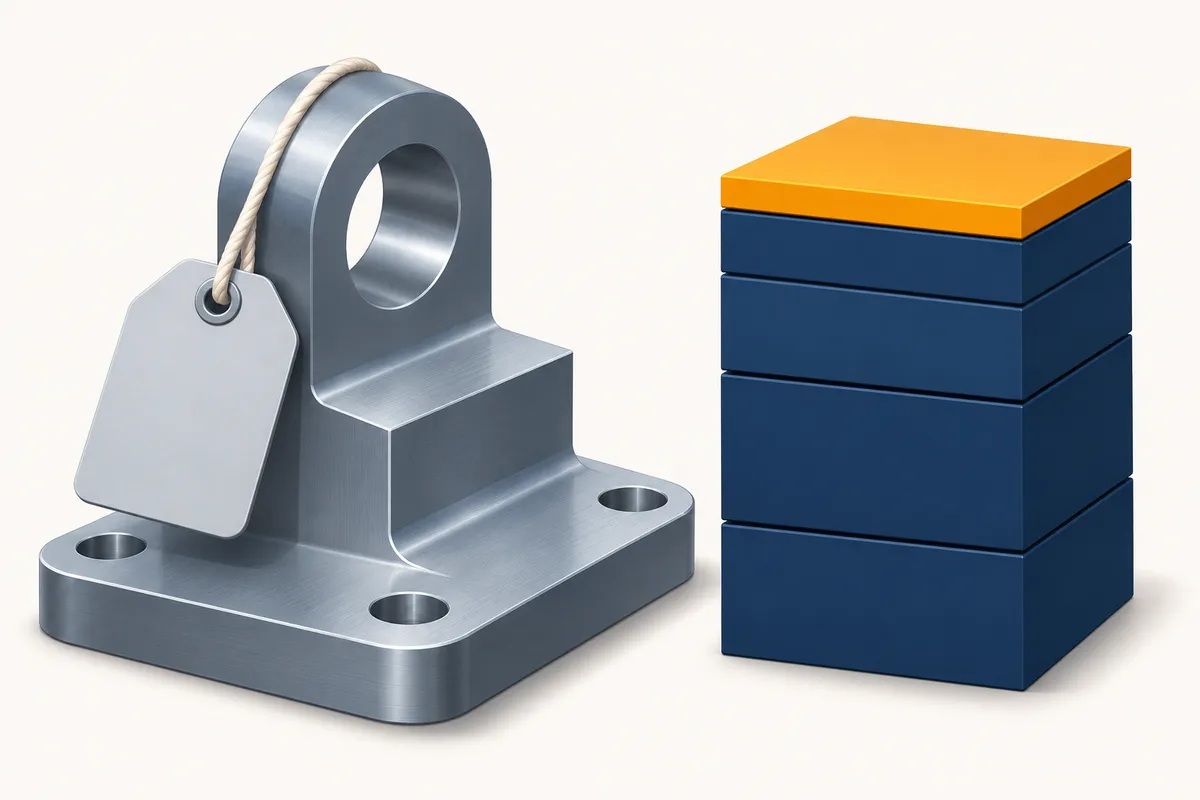
What a job costs to make and what the customer is charged are two different numbers. The gap is the profit. A busy shop can ask for more; a shop with idle machines may accept less just to keep them running.
What it is
Cost is what a job consumes; price is what the customer pays. Cost-plus pricing adds a markup to the estimated cost; market pricing looks at what the job can sell for, given competition, urgency, the customer and how full the shop is. Shops raise prices when busy and lower them to fill idle machines, and watch their win rate to see where they stand. Markup is a percentage of cost and margin a percentage of price: a 25% markup is a 20% margin.
Why it matters for products
A pricing tool needs a cost model and a separate pricing layer with rules for margin, rush, customer and shop load; mixing the two makes the number impossible to explain or tune.