



Casting
铸造
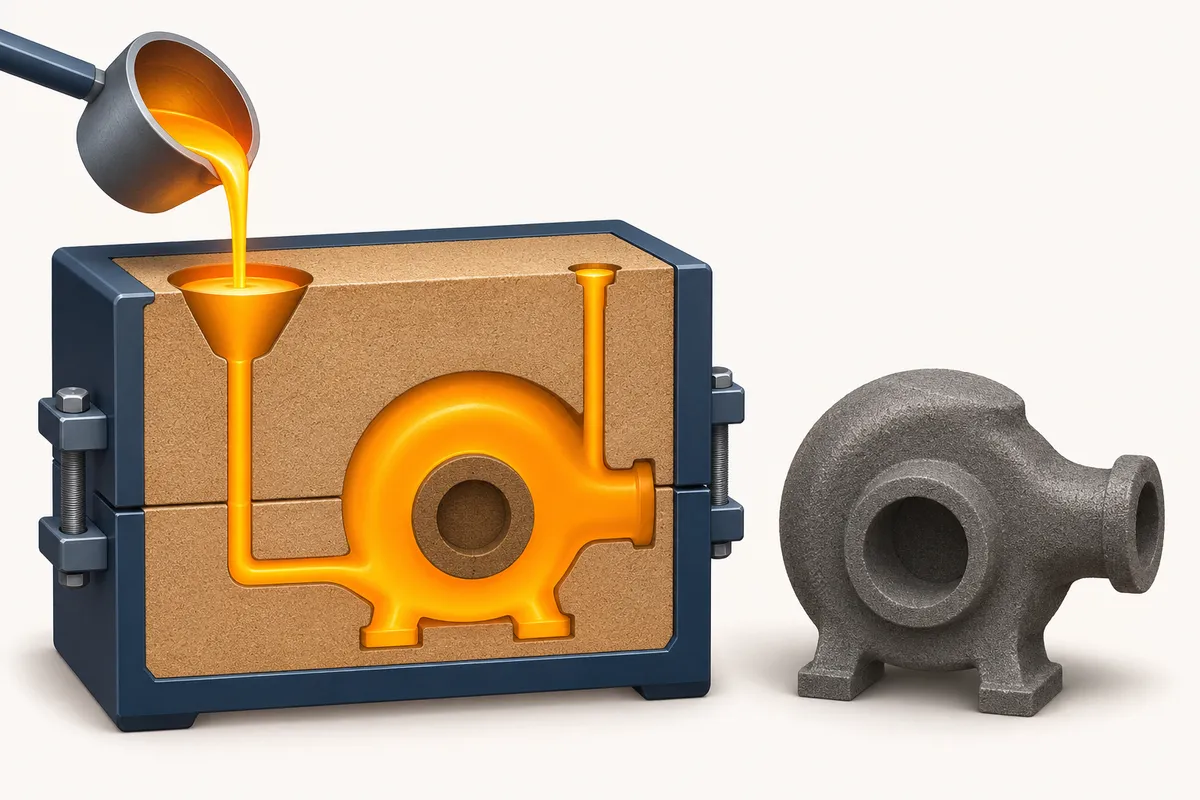
In plain words
Like making ice cubes or a jelly in a mould: pour in liquid metal, let it set, break or open the mould. It makes complicated shapes cheaply in quantity, but rough and not exact, so the faces that matter are machined afterwards.
What it is
Molten metal is poured or forced into a mould and solidifies in the shape of the cavity. Sand casting packs sand round a pattern: cheap tooling, parts from small to very large, iron, steel and aluminium, rough surface and loose tolerances. Investment casting (精密铸造, lost wax) coats a wax copy in ceramic and melts the wax out, for small detailed steel and stainless parts. Die casting (压铸) forces aluminium or zinc into a steel die at high pressure: thin walls, good surface, high volume, an expensive die. Gravity and low-pressure casting into metal moulds sit in between. Castings need draft on walls, allowance for shrinkage, and machining allowance on functional faces, a few millimetres on sand castings and much less on die castings; hidden porosity can open up when a face is machined.
Why it matters for products
Above a certain quantity, casting plus machining beats machining from solid; the quote needs pattern or die cost spread over the volume, a casting price by weight and machining only on the faces that need it (see 130).
Learn first
Making a part like this? Plan the process and estimate costs in Workspace.