


Printing and decorative finishes
丝印、移印与拉丝
In plain words
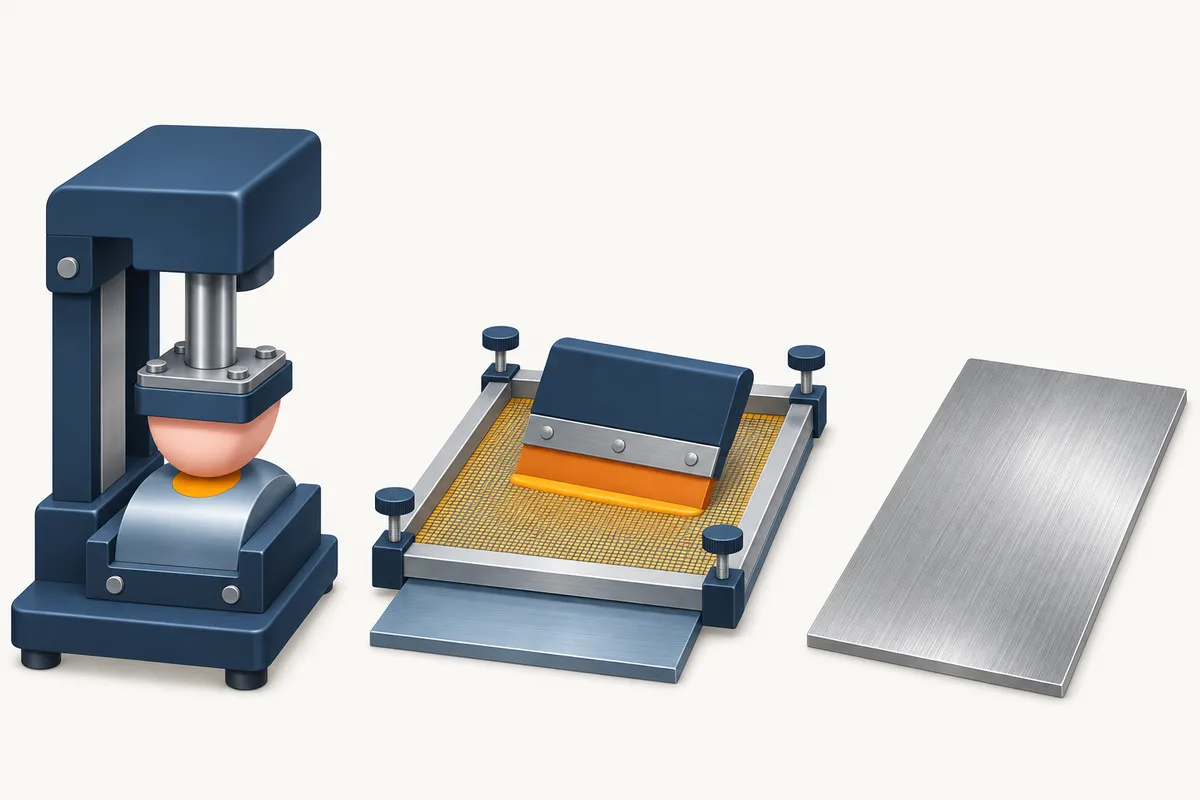
Logos, numbers and scales are often printed onto parts in ink. A screen works like a stencil for flat faces, and a soft rubber pad can pick up an inked picture and press it onto a curved button, like a rubber stamp that bends. Brushing draws fine straight scratches across metal for the grain you see on laptops and fridges.
What it is
Logos, scales and legends are often printed in ink rather than marked (162). Screen printing (丝印) pushes ink through a fine mesh stencil onto a flat or gently curved face, one screen per colour. Pad printing (移印) picks up an inked image from an etched plate with a soft silicone pad and presses it onto curved, recessed or textured surfaces such as buttons and knobs. UV printing jets ink and cures it with ultraviolet light, giving full-colour images without screens. Each needs print-ready artwork, a position drawing, a colour code such as a Pantone number and usually a jig to hold the part. Brushed finish (拉丝) draws an abrasive belt or pad along the surface in straight lines, for the fine directional grain seen on laptops and appliances; on aluminium it is usually done before anodizing (156), and on stainless steel it hides small scratches better than a polished face.
Why it matters for products
Cosmetic options with set-up charges per colour and screen, minimum quantities and added days; on-demand platforms often add them as a surcharge.
Learn first
Making a part like this? Plan the process and estimate costs in Workspace.