



Piece-rate pay and job reporting
计件工资与报工
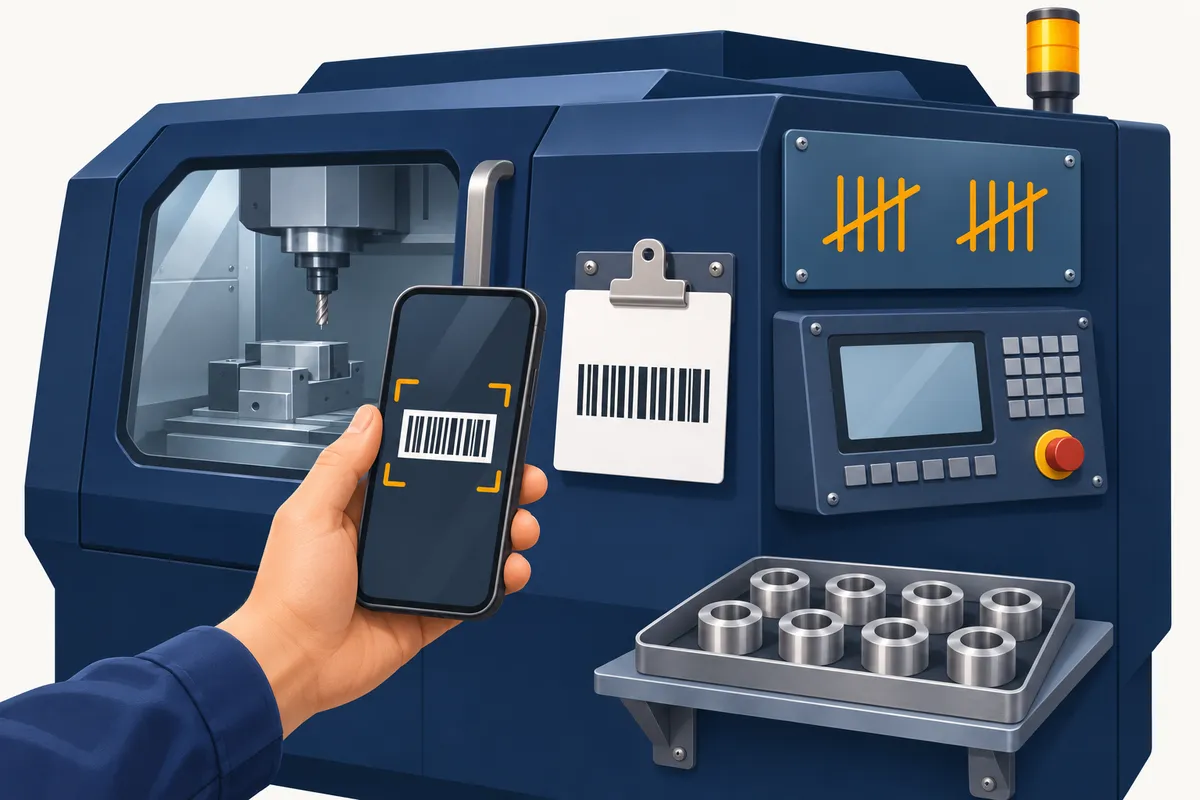
In plain words
In many Chinese workshops operators are paid by the number of good parts they finish, a bit like a fruit picker paid by the basket. After each operation or shift they report how many parts were done and how many were bad, often by scanning a code with a phone. That same report tells the office how far the order has got and how long each step really took.
What it is
Many Chinese machining shops pay operators partly or wholly by output: a price per piece for each operation (工序单价), or credit per standard hour, often on top of a base wage. At the end of an operation or shift the operator reports how many parts were finished, scrapped and reworked against the work order (报工), on paper, at a terminal or by scanning the traveler's code with a phone (扫码报工). That one report drives three things: pay, the progress of the order through its routing (53), and the actual time of each operation (108). It also shapes behaviour. Under piece rate, operators prefer long easy runs to setups and may push cutting data, so shops pay setups separately, often deduct for scrap the operator causes, and have inspectors confirm the counts. A standard time set too tight soon shows up as complaints, and one set too loose as unusually high pay.
Why it matters for products
Reporting must be quick on the shop floor and tie each count to an operation price and an inspection result; it is the cheapest source of actual times for estimate-versus-actual feedback, provided the counts are honest.
Learn first
Making a part like this? Plan the process and estimate costs in Workspace.