Part families and similarity
成组技术与零件相似性
In plain words
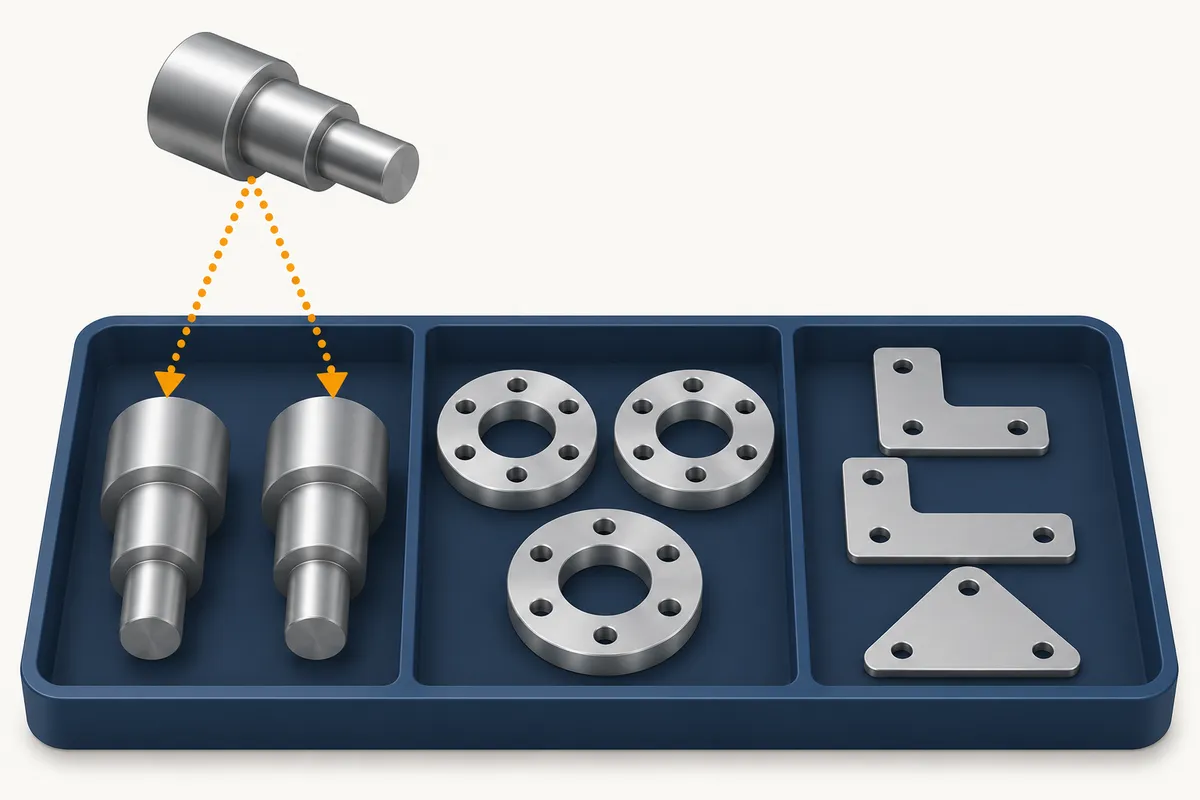
Most “new” parts look a lot like something the shop has made before: another shaft, another flange, another bracket. Sorting parts into families, or searching for the closest look-alikes, lets a shop start from the old recipe, tools and price instead of working everything out again.
What it is
Group technology sorts parts into families that share shape and process, such as shafts, flanges, housings, plates and brackets, historically with classification codes. Parts in one family share routings, fixtures, tools and typical times. The modern form is shape search: compare a new model with past ones by geometric descriptors or learned embeddings and retrieve the nearest jobs.
Why it matters for products
The nearest past jobs, with their actual times and prices, are the cheapest check on a computed quote and the starting point for variant process planning; running one family back to back also cuts setup time.