Work envelope and machine capability
加工行程与设备能力
In plain words
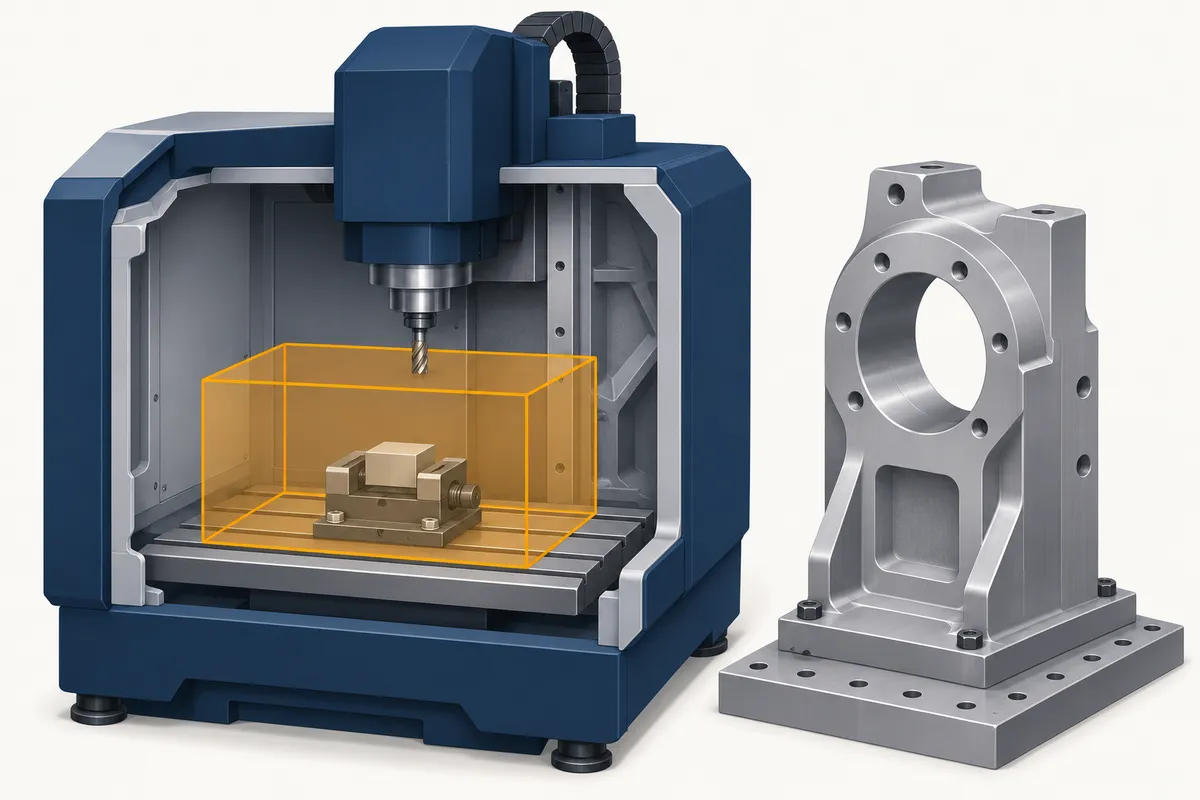
Every machine has a box it can reach inside, like the inside of an oven. The part, plus whatever holds it, plus the tool above it, all have to fit in that box. If they do not, the job needs a bigger machine, and bigger machines cost more per hour.
What it is
Every machine has hard limits: axis travel (about 500 × 400 × 400 mm on a small vertical machine, about 1000 × 500 × 500 mm on a mid-size one), table size and load, swing, turning length and bar diameter on a lathe, spindle power, torque and top speed, the number of tools and the longest tool it can hold. The part has to fit together with its fixture, the tool and room to move, so the largest practical part is well below the travel figures; on a 5-axis machine tilting shrinks the usable space further.
Why it matters for products
The first filter in machine selection: bounding box, weight and material narrow down which machines can run the part, and that choice sets the hourly rate; a shop's capability profile is also what a platform matches orders against.