



Nesting and sheet utilization
排样与板材利用率
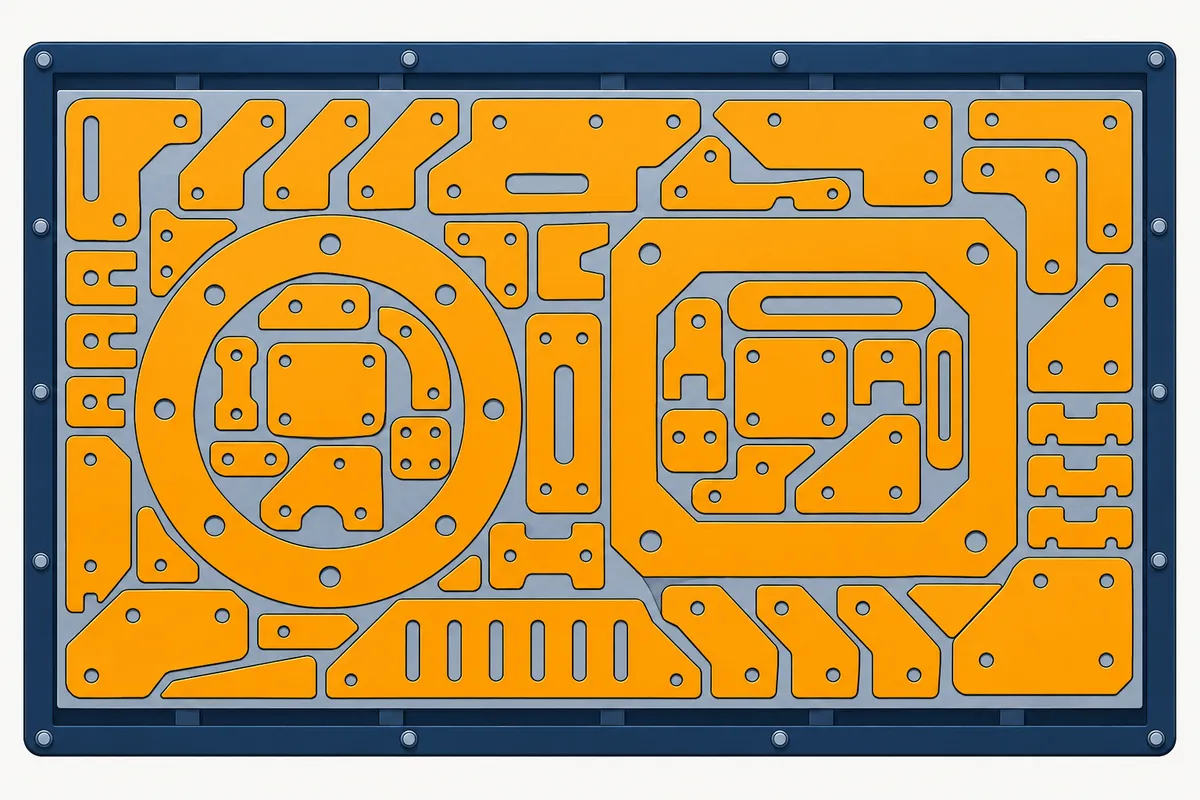
In plain words
Like cutting cookies from rolled-out dough: the better the shapes fit together, the less dough is wasted. Software turns and fits the flat parts so that as much of each big sheet as possible becomes parts and not scrap.
What it is
Flat parts are arranged on a standard sheet, such as 1250 × 2500 or 1500 × 3000 mm, so that as much of it as possible becomes parts. Nesting software rotates the parts, fits small ones into the gaps and holes of large ones, lets neighbours share one cut line, and leaves tiny uncut bridges (micro-joints) so parts stay in the sheet until it is unloaded. What is left is a skeleton of scrap, and sometimes a reusable remnant. Utilization is commonly 60 to 85%, better with many parts and worse with few large or awkward ones. Mixing parts from several orders on one sheet raises it, but makes tracking harder.
Why it matters for products
The material cost of a part is the sheet price times the share of the nest it uses, not its own area; nesting also sets the cut length, the pierces and the laser programs.
Learn first
Making a part like this? Plan the process and estimate costs in Workspace.