



Thread rolling, burnishing and shot peening
滚丝、滚压与喷丸强化
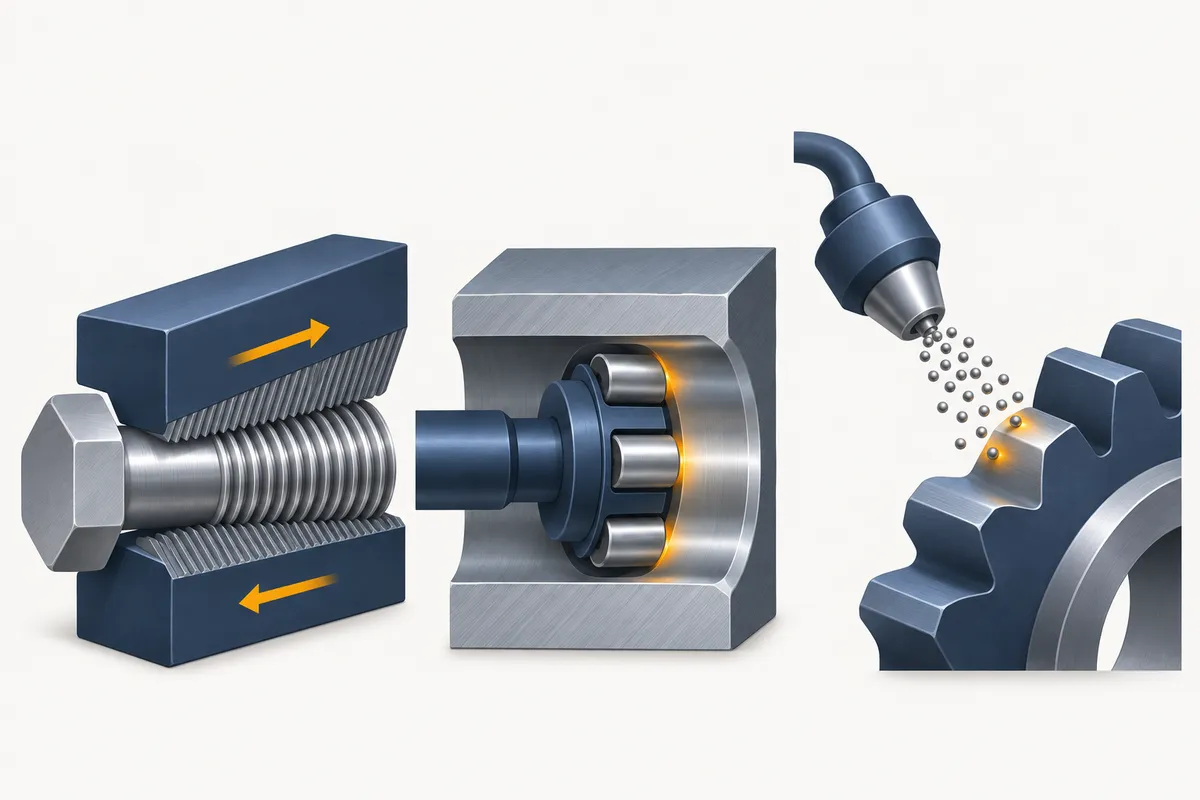
In plain words
Instead of cutting metal away, these methods squeeze it into shape or press it tighter. Thread rolling presses a screw thread into a rod like pressing a pattern into modelling clay, which is fast and makes the thread stronger. Shot peening fires tiny balls at a part, and the millions of small dents leave the surface packed tight so cracks find it harder to start.
What it is
Some finishing steps press metal instead of cutting it. Thread rolling squeezes a blank of about the thread's pitch diameter between hardened dies, so the metal flows into the thread form: no chips, a smooth, work-hardened surface, grain that follows the thread and better fatigue strength, in seconds per part. Most mass-produced bolts are rolled, from closely held blanks of ductile material. Roller burnishing runs hardened rollers over a turned bore or shaft and flattens the peaks of the tool marks into a mirror-like finish in one pass, often in place of grinding or honing on hydraulic cylinders and rods; it corrects size and roundness very little. Shot peening fires small steel, glass or ceramic shot at the surface at a controlled speed, leaving it in compression so fatigue cracks start later: springs, gears, crankshafts, aircraft parts. Unlike cosmetic blasting (160), it is specified by Almen intensity (the bend of a standard test strip) and coverage.
Why it matters for products
Each is a routing step with its own cost, often outside; rolling changes the blank size, and peening adds a controlled process with its own records.
Learn first
Making a part like this? Plan the process and estimate costs in Workspace.