



Thread standards and tolerance classes
螺纹标准与精度等级
In plain words
A screw thread is described with a short code, a bit like a shoe size. M8×1.25 means a metric thread 8 mm across that climbs 1.25 mm per turn, and the letters after it say how tight the fit is. Pipe, inch and left-hand threads have codes of their own, and gauges check them: one end must screw in fully, the other only a turn or two at most.
What it is
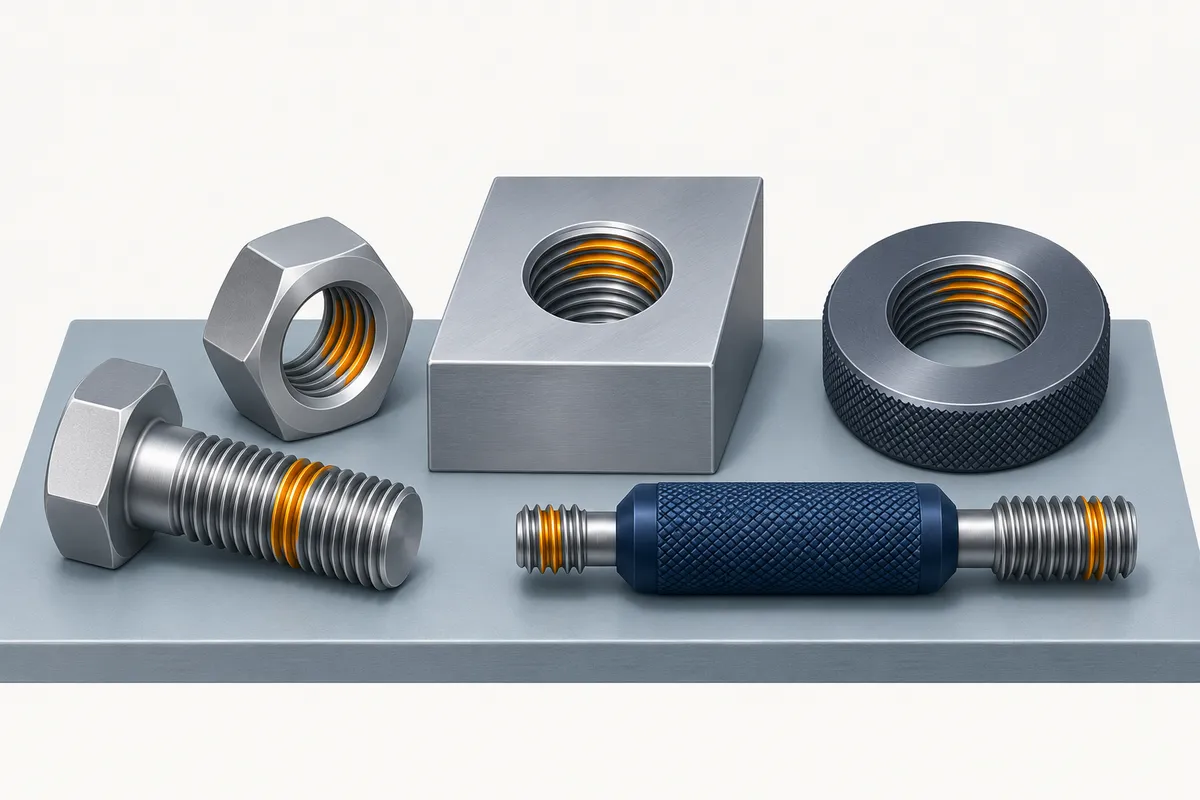
In the metric ISO system, M8×1.25-6H is an 8 mm thread with a 1.25 mm pitch and tolerance class 6H; capital letters are for internal threads, lower case such as 6g for external, and 6H/6g is the usual medium fit. Coarse pitch is the default, so a plain M8 means 1.25; a fine pitch such as M8×1 must be written. In the unified inch system, 1/4-20 UNC-2B is a quarter-inch thread with 20 threads per inch, coarse series, class 2B internal (2A external). Pipe threads are either tapered and seal on the thread itself (NPT, or R and Rc in ISO 7) or parallel and seal with a washer or O-ring (G). LH marks a left-hand thread, and a blind hole needs a stated thread depth. Threads are accepted with gauges: the go plug or ring must screw on fully, the no-go only a turn or two at most, as the gauge standard allows.
Why it matters for products
A thread table keyed by callout gives the tap or thread mill, the tap drill (6.8 mm for M8×1.25), the gauge and any plating allowance; pipe, special and non-standard threads go to review.
Learn first
Making a part like this? Plan the process and estimate costs in Workspace.