


Mould tooling and moulded-part features
模具等级、开模与注塑件结构
In plain words
An injection mould is a precise one-off metal tool and usually the biggest bill in the job, so the quote is mostly about the mould: how many shots it must survive, how many parts it makes per shot, and who owns it. The mould also leaves small fingerprints on every part, such as a tiny bump where the plastic came in and round marks where pins pushed the part out.
What it is
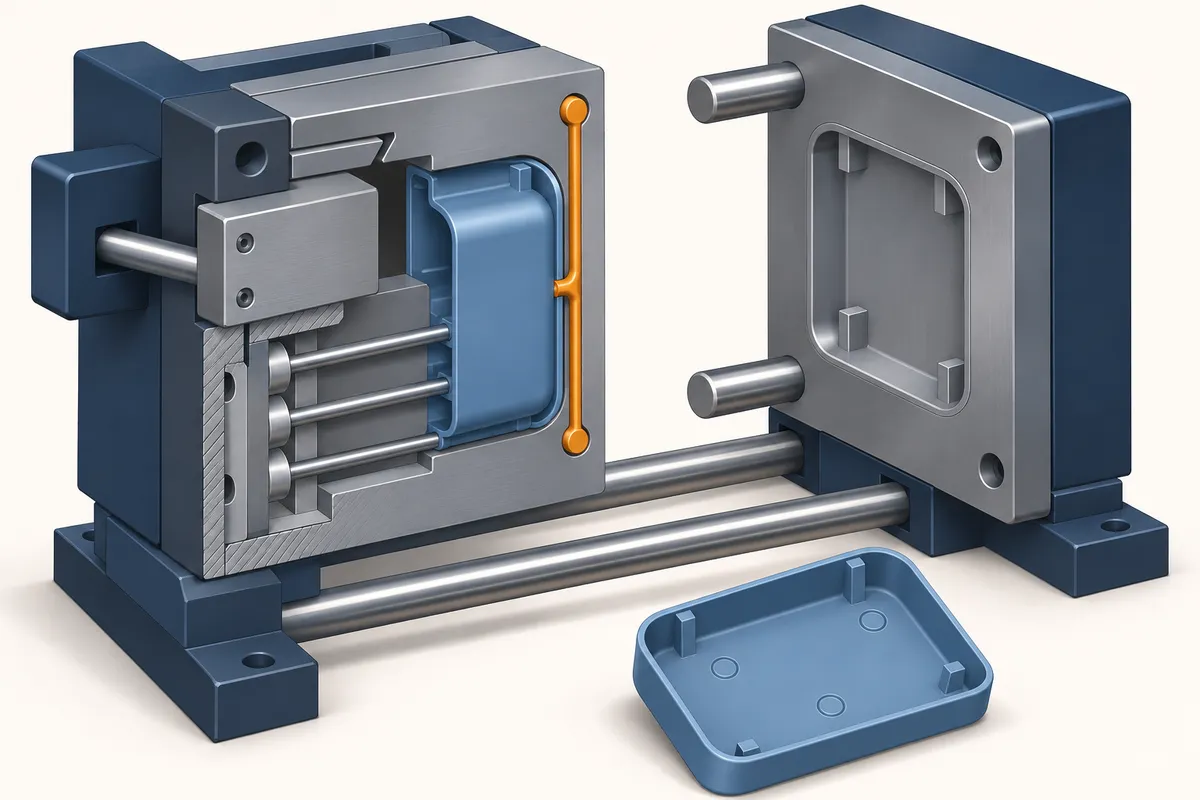
An injection moulding quote (155) is mostly about the mould (139). Moulds are classed by the shots they must last: the SPI classes run from 105, a prototype tool good for up to about 500 shots, to 101, a hardened tool for a million cycles or more. Prototype tools are often aluminium; production tools use pre-hardened P20 or hardened H13 steel. A mould may have one cavity, several identical cavities for more parts per shot, or a family of different parts. The tooling charge (开模费) is paid up front, and the contract states who owns and stores the mould. Trial shots (T1, 试模) give samples, corrected until the buyer approves. The tool leaves marks on every part: a small gate vestige where plastic entered, a parting line that may carry flash, round ejector pin marks, and sliders (行位) or lifters for undercuts, which add cost; thick sections sink and warp. Surface finish is chosen from SPI polish grades or VDI 3400 textures.
Why it matters for products
A moulding quote is tooling (class, cavities, sliders, texture) plus a piece price from cycle time and material, with the DFM report and T1 samples as milestones.
Learn first
Making a part like this? Plan the process and estimate costs in Workspace.